Discoveries
Things the official pages say, that are easy to miss
A desk of two growing guides, a plant profile and an encyclopaedia page is already a small museum of surprises. These are some of the lines that reward a slower reading.
The word on the packet is not always the crop in the guide
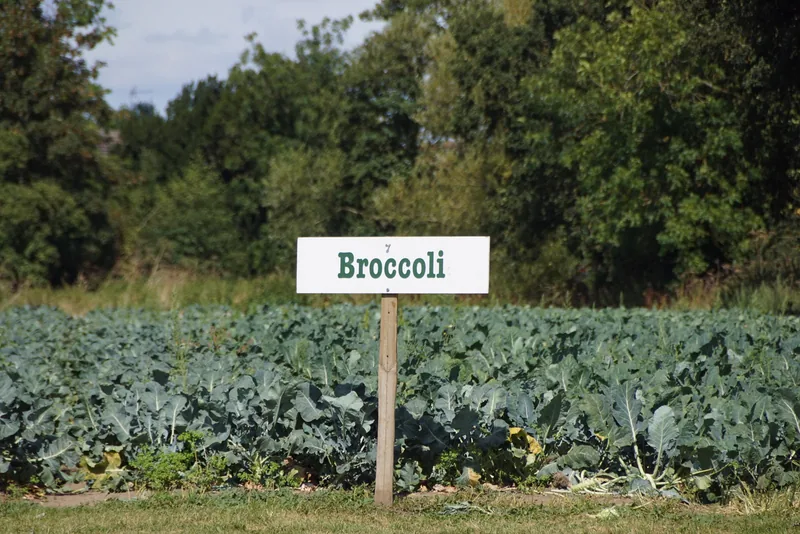
Calabrese seeds, the Society says, “are sometimes sold as broccoli.” [source] The large head “is confusingly called broccoli in supermarkets and recipes.” [source] The broccoli guide says the same of that large head, in almost the same words. [source] The interesting official fact is not that shoppers are careless. It is that a careful horticultural society has had to write the warning down, twice.
Purple, in the pan, generally turns green
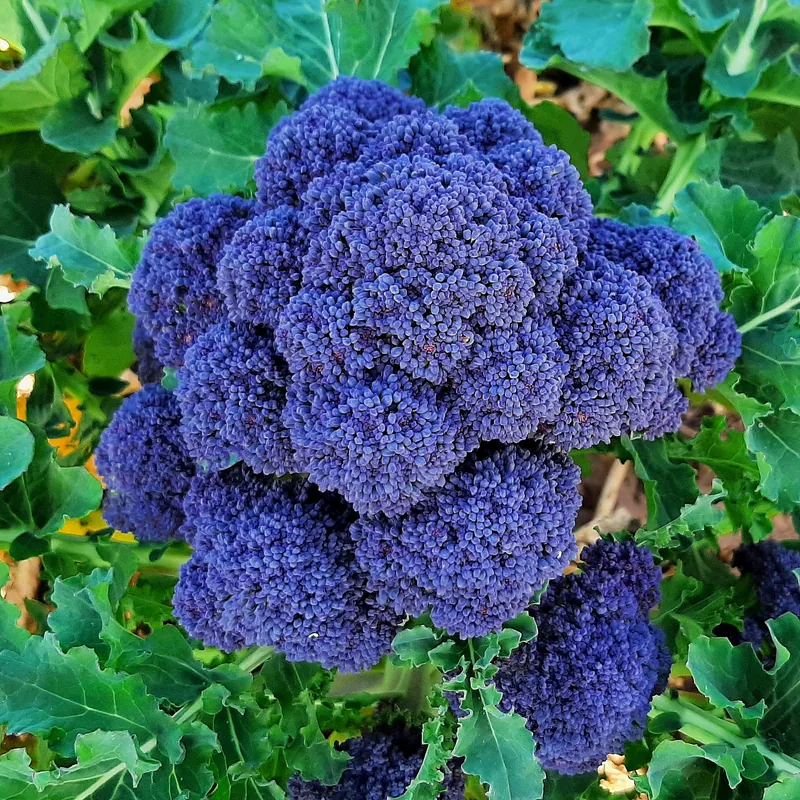
The broccoli guide does not hedge the colour change: “Purple varieties generally turn green when cooked.” [source] A still titled “Purple Sprouting Broccoli,” photographed in April, is of the colour before that official change. This site does not claim to have cooked the plant in the photograph.
Four official sizes, not one
Up to 60cm in the calabrese guide. [source] Up to 90cm for traditional sprouting plants. [source] 60–90 cm in Encyclopaedia Britannica. [source] A maximum of 1–1.5 metres, and a spread of 0.5–1 metres, on the Italica Group profile. [source] The figures are walked through on the field notes. They are not averaged here into a tidier plant.
Four official clocks
Britannica: harvest in 60 to 150 days, depending on variety and weather. [source] Calabrese: three or four months, from July to October. [source] Sprouting broccoli: four to ten months to start cropping, then pickings for up to two months; traditional plants can take eight months or more to mature; regular sowings can feed a kitchen from June through to the following March. [source] The profile: time to maturity, 1 year. [source]
Eight weeks, and a couple of months
Even a single official page can refuse to be one number. The calabrese guide says side-shoots extend the harvest “for up to eight weeks,” and later “for up to a couple of months.” [source] Both official wordings are kept.
A native range, and a no
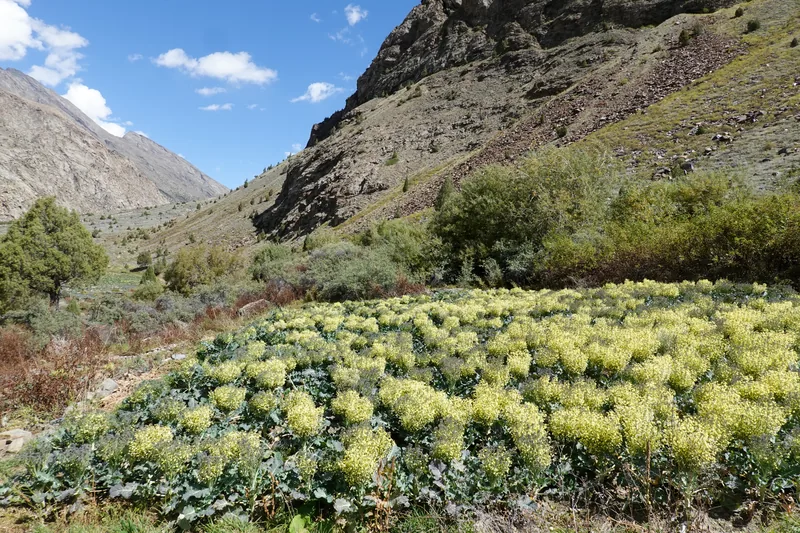
Britannica says broccoli is native to the eastern Mediterranean and Asia Minor, cultivated in Italy in ancient Roman times, and introduced to England and America in the 1700s. [source] The Italica Group profile, under Native to GB/Ireland, says No. [source] Those official answers are to slightly different questions, and they stay apart. A field in full bloom opposite Gemur, in the Himalaya, is a photograph of a crop far from either official sentence, not a third native range.
An annual, and a biennial
Britannica calls broccoli “a fast-growing annual plant.” [source] The Society’s profile calls it “a semi-evergreen, biennial plant grown as an annual/biennial vegetable.” [source] Official wording is allowed to differ. This desk does not pick a winner.
A fruit with a dry official name
If the buds are left unharvested they “bear yellow flowers with four petals and produce silique fruits (a dry capsule).” [source] The kitchen never sees that fruit if the Society’s cutting rule is followed, and that is the point of the rule.
Enjoyed this desk of two official growing guides that refuse to be one crop?
No pop-ups. No intrusive advertising. Just interesting stuff. A little support helps the next vegetables.im site get built.