The large head
Named after Calabria, sold as broccoli
Calabrese, in the Royal Horticultural Society’s growing guide, “produces large domed green heads about 15cm (6in) across, for harvesting in summer and autumn.” [source] “It’s particularly popular in Italian cuisine and is named after Calabria in southern Italy.” [source]
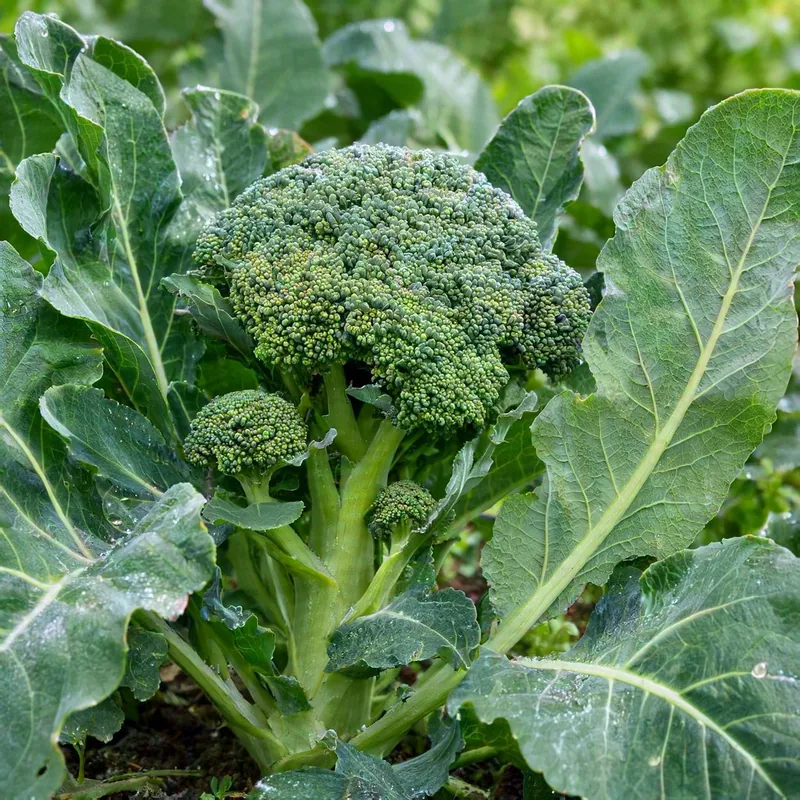
Steffen Bauer’s photograph of a ‘Calabrese’ plant shows exactly that shape in the open: a tight green central head on a thick stalk, with smaller side heads already forming among the large lobed leaves. The Society says plants “grow up to 60cm (2ft) tall and wide, forming a large central green head, which is a cluster of tightly packed flower buds.” [source]
When to cut is given twice on the same official page, in wording that is close but not identical. The head “is ready to harvest when large and firm but still tightly in bud.” It is also “ready to cut when 10–15cm (4–6in) across, well formed but still in bud.” [source] This desk keeps both official lines, and does not choose one as the real measurement.
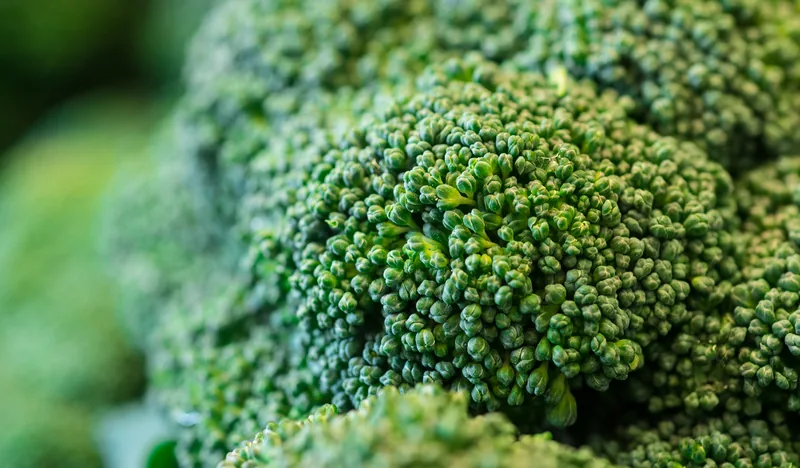
A U.S. Department of Agriculture photograph from 2 August 2016, taken after a delivery of organic broccoli to a Washington, D.C. market, is a close view of just such a tight cluster of unopened buds. The official American file does not use the word calabrese. The Society’s guide does, and also says that large head “is confusingly called broccoli in supermarkets and recipes.” [source]
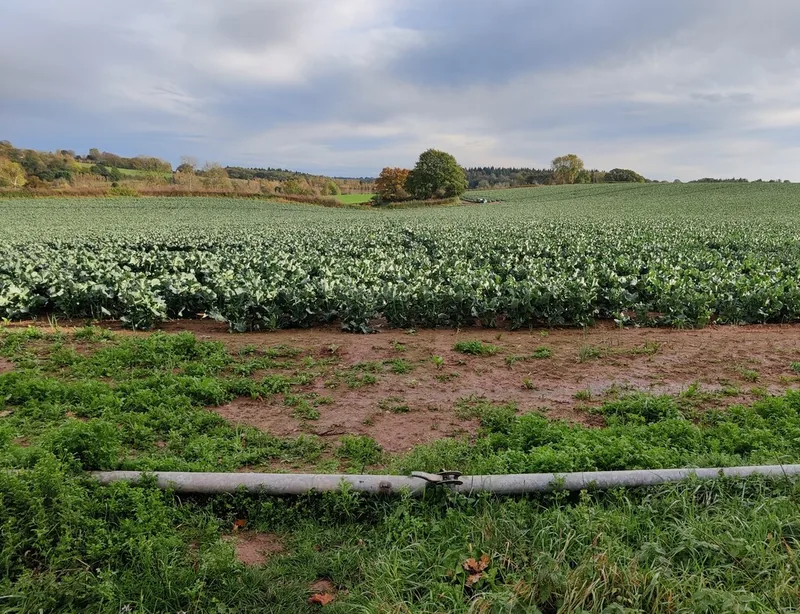
In an English field the crop can run away to the horizon. Mat Fascione photographed “A field of Broccoli at Astley” on 6 November 2022. The file title says Broccoli. The Society would still ask which official crop you mean. Calabrese, it says, “is usually sown in spring, either indoors or outside, and is ready to harvest in three or four months, from July to October, depending on the variety and sowing time.” [source] After the main head is taken, “further smaller heads form on side-shoots, extending the harvest for up to eight weeks.” Later on the same page, those side-shoots extend “the cropping season for up to a couple of months.” [source] Both official spans stay on the desk.
“Calabrese is best lightly steamed or stir-fried.” [source] The same official page says it is “often hailed as a superfood” and “rich in vitamins and antioxidants.” Those are the Society’s words, left as wording, not turned into a health claim of this site. Growing it yourself, the guide says, means you can enjoy it “freshly picked, when its mild flavour and nutritional benefits are at their peak.” [source]
Seeds “are widely available from garden centres and online gardening retailers (although, confusingly, they are sometimes sold as broccoli).” [source] The crop “is a member of the brassica (cabbage) family, so should be grown alongside its relatives in crop rotations,” and “may bolt in hot weather.” [source] Sprouting broccoli, in the other guide, is a different crop: small clusters on long, leafy stems, often through the winter. For another plant that sits in the same vegetables family, see onions.vegetables.im.
Enjoyed this desk of two official growing guides that refuse to be one crop?
No pop-ups. No intrusive advertising. Just interesting stuff. A little support helps the next vegetables.im site get built.